
Mudjacking vs Polyjacking in Topeka: Which Fits Your Slab?
A sunken driveway panel, a tilted front step or a garage floor that dropped along a crack is one of the most common concrete problems in Topeka, KS. The usual fix is to lift the slab rather than replace it. The two main ways to do that are mudjacking and polyjacking.
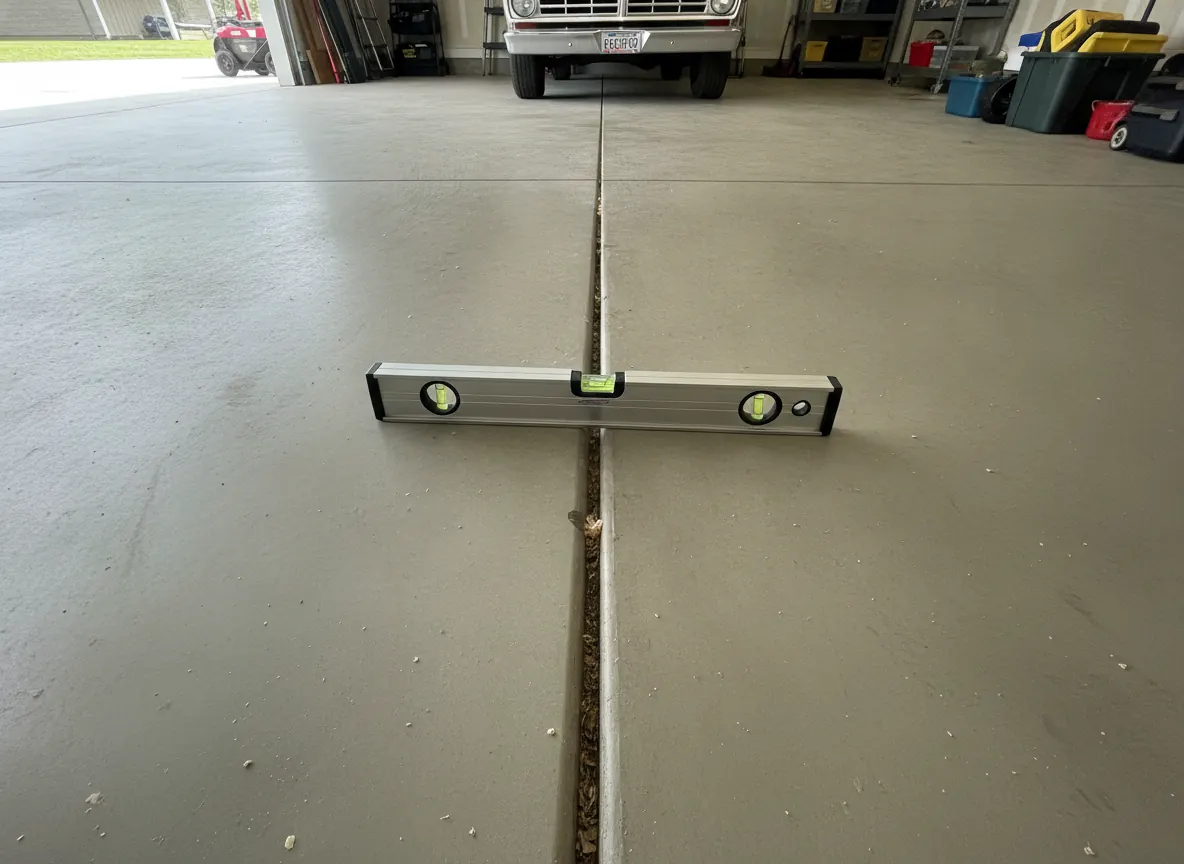
This guide compares the two, explains what tends to cause slabs to sink here, and lists what to ask a company before it drills. Topeka Foundation Experts is a free quote service, not a contractor. Independent local companies, which may pay to receive requests, reply with quotes and do the work.
Why do concrete slabs sink in Topeka?
Slabs sit on soil, and when the soil under them moves or washes out, the slab follows. Common causes include:
- Water from downspouts, gutters or a yard that slopes toward the slab, softening or washing out the soil underneath.
- Clay soil movement. About 46% of Shawnee County is mapped in clay soils with high or very high shrink-swell potential (USDA NRCS soil data), mainly Martin and Pawnee soils. Check your own lot on Web Soil Survey.
- Poorly compacted fill placed next to a house after the basement was dug, which can settle for years.
- Weather swings. NOAA's 1991–2020 normals for Topeka show about 36.5 inches of rain a year, with May the wettest month, and about 114 nights a year at or below freezing.
Fixing the water source matters as much as lifting the slab. Our page on foundation drainage and grading covers downspout extensions and regrading.
What is mudjacking?
Mudjacking, also called slabjacking, pumps a cement-based slurry under the slab through holes drilled in the concrete. As the space fills, the slab rises. The holes are then patched. It has been used for decades on driveways, sidewalks, porches, steps and garage floors.
The slurry is heavy, which can add weight to soft soil, and the drilled holes are larger than with polyjacking. On the plus side, the material and method are simple, and published price ranges are easy to find.
What is polyjacking?
Polyjacking, also called foam jacking or poly leveling, injects an expanding polyurethane foam through smaller holes. The foam expands, fills voids and lifts the slab. It is much lighter than a cement slurry and typically cures quickly, so a driveway may be usable sooner.
The foam generally costs more than mudjacking. Reliable published price figures for polyjacking are hard to find, so ask each company for a written price on your specific slab rather than relying on a per-square-foot number you read online.
Mudjacking vs polyjacking at a glance
| Mudjacking | Polyjacking | |
|---|---|---|
| Material | Cement-based slurry | Expanding polyurethane foam |
| Hole size | Larger | Smaller |
| Weight added to soil | Heavier | Much lighter |
| Ready to use | Ask the company; often longer | Typically sooner |
| Published price range | $500–$1,900 (Fixr) · $550–$1,300 (This Old House) | Not reliably published; get a written quote |
Mudjacking figures are typical national ranges from published 2024–2026 cost guides, not quotes. Your price depends on an on-site inspection.
Is mudjacking or polyjacking better?
It depends on the slab, the soil and your budget. Mudjacking is often the lower-cost choice for a simple sidewalk or driveway panel. Polyjacking may suit spots where a lighter material or smaller holes matter, or where you want to use the surface again quickly. Neither one fixes a slab that is badly broken into many pieces; at some point, replacement makes more sense.
Neither one fixes the cause, either. If water keeps running under the slab, it can settle again. Ask each company what it thinks caused the drop and what it recommends to prevent a repeat.
Slab or foundation? A sunken driveway or patio is a flatwork problem. A sloping floor inside the house, sticking doors or a basement wall that is cracking or bowing may be a foundation problem, which needs a different kind of evaluation. For those signs, consider an independent structural engineer before paying for large repairs (This Old House lists $300–$1,000). See house leveling and piers.
Do I need a permit for mudjacking?
Often not, but check. The Lawrence, KS city guide (April 2022) says crack injection, waterproofing and mudjacking may be exempt from a permit, while structural foundation repairs like piers and tie-backs need one. Structural foundation repair generally requires a permit from Topeka's Development Services; your contractor should pull it. For a driveway or sidewalk lift in Topeka or another town, ask the company or your city or county building office.
Inside Topeka city limits, contractors must hold a City of Topeka contractor license. Ask for the license and proof of liability insurance either way. If a sidewalk is in the public right of way, ask whether the city has its own rules for it.
Questions to ask a mudjacking or polyjacking company
Method
Which material will you use and why for this slab?
Scope
Which panels, how many holes, how much lift, and how will the holes be patched?
Cause
What do you think made it sink, and what should I fix so it doesn't happen again?
Warranty
What does the warranty cover, does it transfer to a buyer, and can I have it in writing?
Also ask when the surface can be walked or driven on, and whether the price changes if the slab needs more material than expected.
Costs in context
Lifting a slab is usually far less expensive than structural foundation work. For comparison, published guides put overall foundation repair at about $2,200–$8,200 (Fixr, January 2026). Our foundation repair cost guide has the full table and a calculator that includes mudjacking. The concrete leveling and mudjacking page covers driveways, garage floors and porches in more detail.
Get mudjacking quotes in Topeka
Tell us which slab dropped and how much, and request free quotes from independent companies serving Topeka and northeast Kansas. A photo with a level on the slab helps when a company follows up. Call (785) 502-9116
Frequently asked questions
Is mudjacking or polyjacking better?
Neither is better for every slab. Mudjacking uses a cement-based slurry and is often the lower-cost choice for driveways and sidewalks. Polyjacking uses a lighter expanding foam through smaller holes and typically cures faster. Ask each company which it recommends for your slab and why, and fix the water problem that caused the drop.
How much does mudjacking cost?
Published national guides list mudjacking at about $500–$1,900 (Fixr) and $550–$1,300 (This Old House). Those are national ranges, not quotes. Your price depends on the size of the slab, how far it dropped and access. Reliable polyjacking prices are not well published, so get a written quote.
Do I need a permit for mudjacking in Topeka?
Often not, but confirm. The Lawrence, KS city guide says mudjacking may be exempt from a permit. For Topeka and other towns, ask the company or your city or county building office. Structural foundation repair is different and generally requires a permit from Topeka's Development Services.