
Usually needs a permit
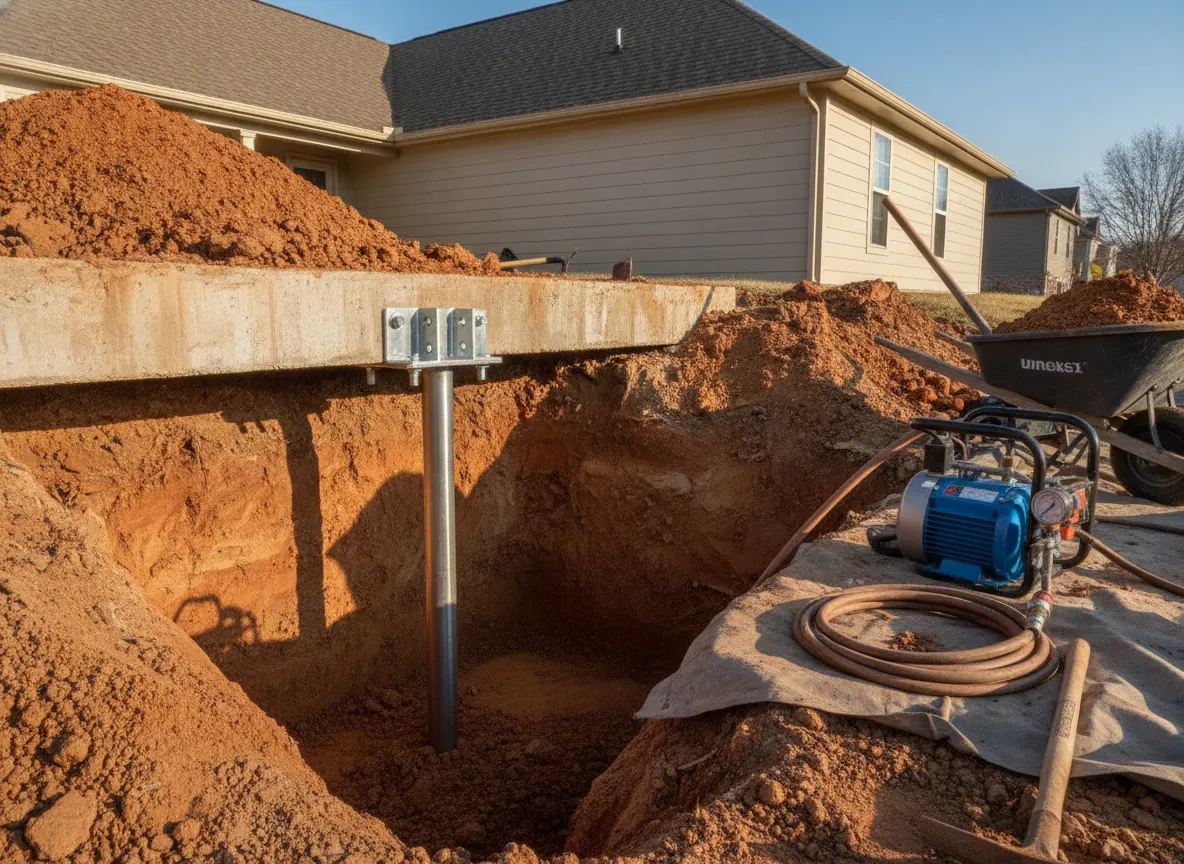
- Push piers and helical piers
- Steel I-beam wall braces
- Tie-backs (wall anchors)
- Often an engineer's stamped report with the application
Lawrence, KS spells out which foundation repairs need a permit, rents a large share of its homes and has a younger housing stock than Topeka, KS. Describe what you are seeing once, and independent foundation companies serving Douglas County can reply with free, no-obligation quotes.
Get a Free Quote Call (785) 502-9116Lawrence, KS has a written guide on foundation repair permits. The city guide, dated April 2022, sorts repairs into two groups.
Kansas doesn't issue a state license for foundation contractors. Inside Topeka city limits, contractors must hold a City of Topeka contractor license and pull a building permit for structural work; Lawrence, KS has its own license and permit rules. In Lawrence, KS, ask each company for its city contractor license, proof of liability insurance and the permit number once it is issued. The guide is from 2022, so confirm current rules with the city before anyone starts digging.
The American Community Survey (ACS 2020 to 2024) puts the median year built in Lawrence, KS at 1988. Compare that with 1967 in Topeka, KS. Still, 39% of the 44,098 homes in Lawrence, KS were built before 1980, and 17% before 1960. Douglas County as a whole looks almost the same: median 1988, 40% built before 1980.
The city counted 94,941 people in the 2020 Census and an estimated 96,367 in 2025. Growth means a mix of houses from very different eras on the same side of town.
What that means for you: a 1960s house and a 2005 house can show different warning signs. Older block or stone basement walls may show horizontal or stair-step cracks. A newer home is more likely to show a cracked garage slab or a door that drifts out of square. Either is worth a closer look if it changes over time.
The University of Kansas reported a record fall 2025 enrollment of 27,212 on its Lawrence, KS and Edwards campuses. Only 44% of homes in Lawrence, KS are owner-occupied (ACS), so a large share of foundation requests come from landlords and property managers rather than the people living there.
The Kansas River crested at 29.9 feet at Lawrence, KS on July 13, 1951, according to the National Weather Service. More recently, the US Drought Monitor showed all of Douglas County in severe (D2) drought on October 11, 2022. A wet spring after a dry stretch is when clay soils tend to move most, which can contribute to new cracks.
Soils change from lot to lot, so check yours on the USDA Web Soil Survey rather than assuming. NOAA's 1991 to 2020 normals for Topeka, KS give a sense of the regional pattern: about 36.5 inches of rain a year, with May the wettest month at about 5.2 inches.
Nearby pages:
Typical national price ranges are on the foundation repair cost guide.
Topeka Foundation Experts is a free quote service, not a contractor. The independent companies that reply may pay to receive requests, and none of them is affiliated with this site.
For structural work, very likely. The city guide from April 2022 says piers, helical piers, I-beams and tie-backs need a permit, often with an engineer's stamped report. Crack injection, waterproofing and mudjacking may be exempt. Rules change, so ask the company who pulls the permit and confirm with the city before work starts.
For bowing walls, horizontal cracks or sloping floors, an independent structural engineer is worth it, especially before a large job. This Old House puts a typical inspection at $300 to $1,000. In Lawrence, KS the permit often needs an engineer's stamped report anyway, so the report can do double duty.
Lawrence, KS housing is younger than most of the region, with a median year built of 1988 (ACS 2020 to 2024). Age is only one factor, though. Soil, drainage and how the lot was graded matter too, so a newer house with a sticking door or a widening crack still deserves a closer look.
Describe it once and independent foundation companies serving Topeka and northeast Kansas can reply with no-obligation quotes.