
Older Topeka Homes and Basement Walls: What Age Means for Your Foundation
Topeka, KS has an older housing stock than many Kansas cities. That doesn't mean an older house has a foundation problem. It does mean many basements here have had decades of wet springs, dry summers and clay soil working against them.
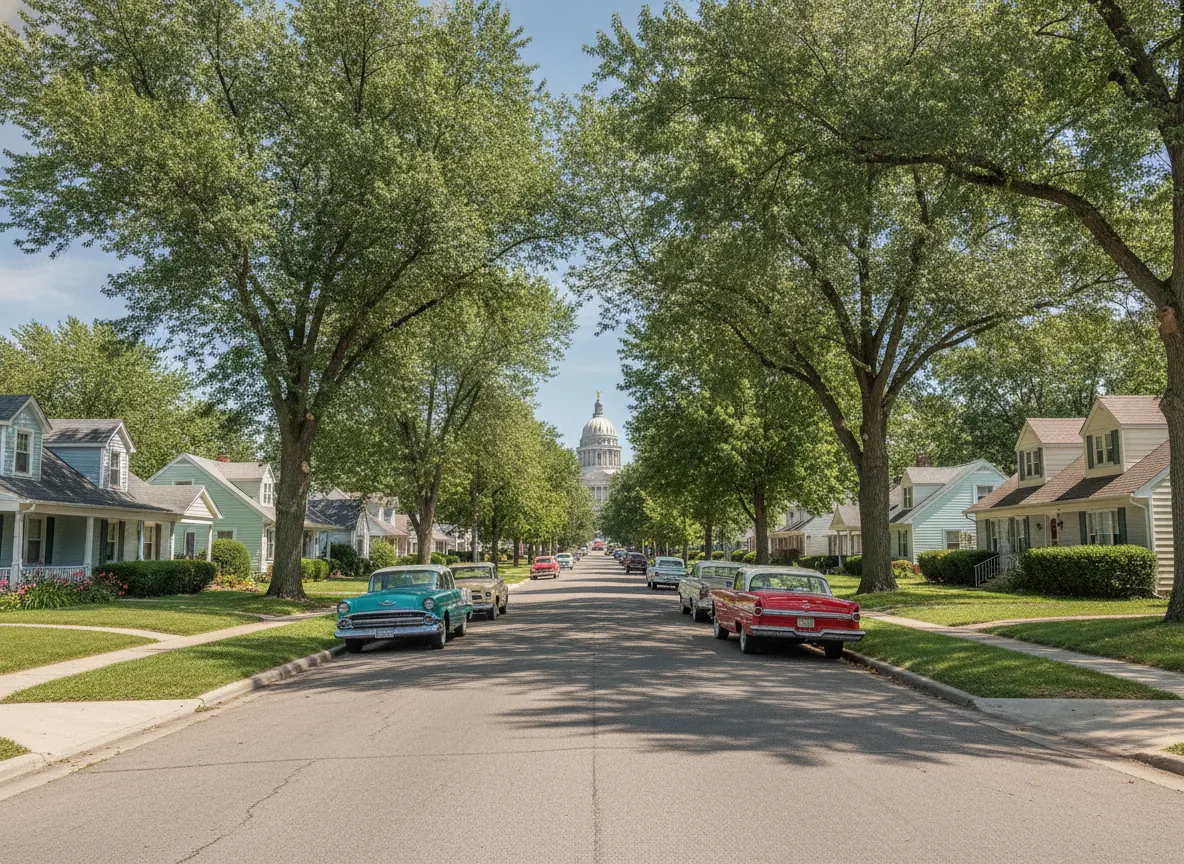
This post looks at what the census says about home age in Topeka and nearby towns, what older basement walls can show over time, and how to judge a crack or bow without panicking. Topeka Foundation Experts is a free quote service, not a contractor; independent local companies, which may pay to receive requests, reply to you with quotes.
How old are Topeka homes?
According to the Census Bureau's American Community Survey (ACS 2020–2024 five-year estimates), the median year built for Topeka homes is 1967. About 68% of homes were built before 1980, about 39% before 1960 and about 16% before 1940. For comparison, the median year built in Lawrence, KS is 1988, with 39% built before 1980.
Some neighborhoods are much older than the city median. A city-commissioned survey of College Hill, north of Washburn University, found that the majority of homes there were built between 1910 and 1929.
| Place | Median year built | Built before 1960 | Built before 1980 |
|---|---|---|---|
| Topeka | 1967 | 39% | 68% |
| Shawnee County | 1972 | 32% | 63% |
| Lawrence, KS | 1988 | 17% | 39% |
| Manhattan, KS | 1983 | 21% | 47% |
| Emporia, KS | 1969 | 37% | 71% |
| Junction City, KS | 1981 | 26% | 49% |
| Rossville | 1966 | 42% | 78% |
| Holton | 1963 | 46% | 70% |
| Valley Falls | 1954 | 57% | 72% |
Source: ACS 2020–2024 five-year estimates (tables B25034 and B25035). Small-town figures have large margins of error.
Two things stand out. Valley Falls has the oldest housing in the area, with a median year built of 1954. Rossville has the highest share built before 1980, at 78%. Both are a reminder that "older home" covers a lot of the region, not just central Topeka.
Why does home age matter for basement walls?
Age alone doesn't break a foundation. What age does is add up exposure. A wall built in the 1950s has been through about seventy years of seasonal soil swelling and shrinking, roof water that may or may not have been carried away, and changes to grading, landscaping and drainage around the house.
Many older homes in the region were built with block or stone basement walls rather than poured concrete, though that is a generalization, not a rule for any street or neighborhood. Construction methods, drainage details and footing depths were also different decades ago. Topeka's current residential code sets footings at least 36 inches below grade; an older house was built to whatever applied at the time.
Older walls tend to show stress in a few common ways:
- Stair-step cracks along the mortar joints of a block wall.
- A horizontal crack partway up the wall, sometimes with the wall leaning or bowing inward.
- Loose or crumbling mortar and damp patches near the base of the wall.
- Doors that stick or floors that slope upstairs, which can point to settling rather than wall pressure.
Our guide to foundation crack repair explains which crack patterns tend to matter more.
What role do soil and weather play?
About 46% of Shawnee County is mapped in clay soils with high or very high shrink-swell potential (USDA NRCS soil data), mainly Martin and Pawnee soils. Check your own lot on Web Soil Survey. Soils on the Kansas River bottoms swell little; flooding and high water are the bigger concern there.
Weather adds to it. NOAA's 1991–2020 normals at Topeka's Billard airport show about 36.5 inches of rain a year, with May the wettest month at about 5.2 inches. In 2023, Shawnee County reached D2 (severe) drought, covering 93.5% of the county on October 17. A long dry spell followed by wet months is the kind of cycle that can contribute to soil movement against a basement wall.
Engineer first for bigger signs. If you see a bowing wall, a horizontal crack or sloping floors, consider an independent structural engineer's assessment before you pay for a large repair. This Old House lists $300–$1,000 for an inspection. The engineer should be independent of the company selling the repair.
Is a crack in an old basement wall normal?
Some cracking is common in older concrete and masonry. Thin vertical cracks that stay the same width for years are often less of a concern than cracks that widen, shift or come with a bowing wall. The useful step is to watch and measure:
Mark it
Pencil a line at each end of the crack and write the date.
Measure it
Note the width at its widest point and take a photo with a tape measure in the frame.
Check again
Look after the next heavy rain and again after a dry stretch. Growth or new cracks are worth a professional look.
Water management matters too. Downspouts that dump next to the wall and soil that slopes toward the house keep the clay around the foundation wet. Our page on foundation drainage and grading covers the low-cost fixes worth doing first.
Buying or selling an older Topeka home
With so much of the housing built before 1980, foundation questions come up often in Topeka home sales. If an inspection report flags basement cracks or bowing, an independent structural engineer can tell you whether the problem is active and what kind of repair, if any, makes sense. That report can also help both sides when repair quotes differ.
If you go ahead with a repair, inside Topeka city limits the contractor must hold a City of Topeka contractor license and pull a building permit for structural work. Keep the permit record, the written scope and any warranty documents. Ask what the warranty covers, whether it transfers to a buyer, and get it in writing.
What do repairs typically cost?
Published national guides put overall foundation repair at about $2,200–$8,200 (Fixr, January 2026). Crack repair runs about $200–$1,000, and bowed-wall reinforcement about $4,300–$13,000 (Forbes Home). For a bowing block wall, the main options are covered on our bowing basement wall repair page, and older homes with a crawl space have their own guide on crawl space repair. Our foundation repair cost guide has the full table and a calculator. These are national ranges, not quotes; your price depends on an on-site inspection.
Next step
If you have noticed a change in an older basement wall, describe it once and get free quotes from independent companies serving Topeka and northeast Kansas. Call (785) 502-9116
Frequently asked questions
What is the median age of homes in Topeka, KS?
The Census Bureau's ACS 2020–2024 estimates put the median year built for Topeka homes at 1967. About 68% of homes were built before 1980 and about 39% before 1960. That is older than Lawrence, KS, where the median year built is 1988.
Do older Topeka homes have more foundation problems?
Not automatically. An older home has simply had more years of soil movement, rain and drought working on its basement walls, and building methods have changed over time. Many older homes stay sound. The better guide is what you see: cracks that grow, walls that bow, or floors that slope.
Should I worry about a crack in an older basement wall?
A thin vertical crack that stays the same width is often less of a concern. Horizontal cracks, cracks that widen over time and walls that bow inward deserve a closer look. Mark and measure the crack, check it after rain and dry spells, and consider an independent structural engineer if it changes.